Stop guessing whether AI is surfacing your company.
Editorially maintained by GEO-Pulse Editorial.
See, fix, and prove your AI visibility. GEO-Pulse shows where your company appears in AI answers, turns gaps into prioritized improvements, and helps you verify whether visibility is improving over time.
Start with a free audit to see where AI visibility is weak, what to fix first, and whether the gaps are serious enough to warrant deeper implementation work.
The pulse of your AI visibility — rendered, not guessed
See where AI includes you
Understand whether your public pages are structured well enough for answer engines to find, interpret, and reuse in buyer-relevant moments.
Fix what keeps you from being cited
Turn crawl, structure, metadata, and trust gaps into a practical fix list instead of another static audit report.
Turn audits into shipped work
Move from findings to prioritized implementation work across engineering, content, and SEO without guessing what matters first.
Prove improvement over time
Surface patterns that affect how clearly your pages present facts and entities — not rankings or predictions.
A better score is not the point
The real outcome is making your company easier for AI systems to find, understand, and include in relevant answers. The score is useful, but it is not the value by itself.
What the product does
GEO-Pulse helps teams see where AI includes them, fix what keeps them from being cited, and track whether visibility is improving over time.
What the score is for
The score is a leading indicator for prioritization, not the product outcome. The real outcome is stronger inclusion in the AI answers that matter.
What a strong result looks like
A strong result means important pages are crawlable, explicit, easy to extract, and easier for answer engines to understand and reuse accurately.
What to do first
Fix blocking directives first, then improve answer structure, trust signals, and product clarity on the pages that shape demand.
See, fix, and prove your AI visibility
GEO-Pulse is strongest when it helps you understand where AI includes you, what blocks better visibility, and whether the changes are actually working over time.
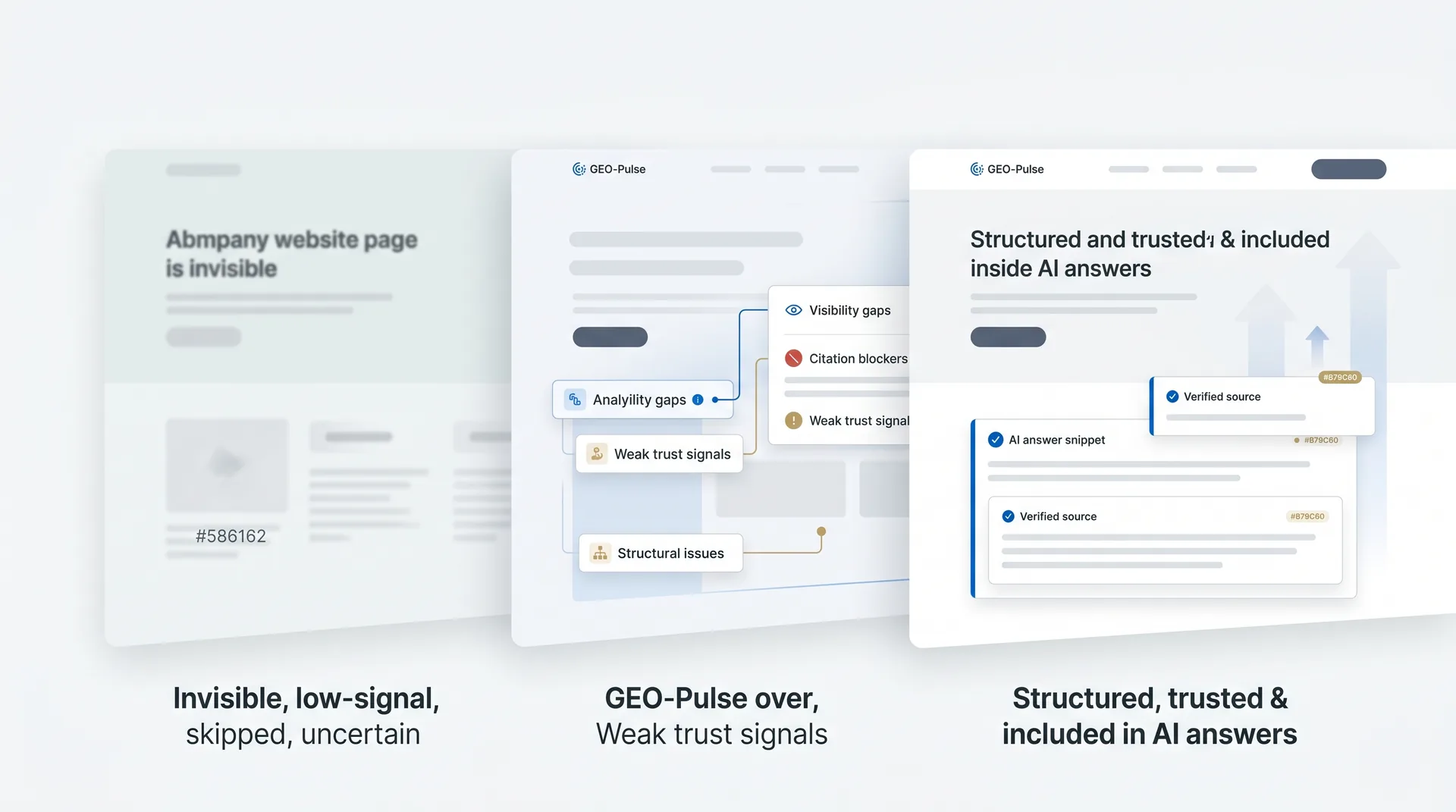
See
Scan your public site to understand where AI visibility is weak, fragile, or blocked by crawl, structure, and trust gaps.
Fix
Turn the findings into prioritized implementation work so the right team can move on the right changes first.
Prove
Track whether visibility is improving over time so progress means more than a one-time score change.
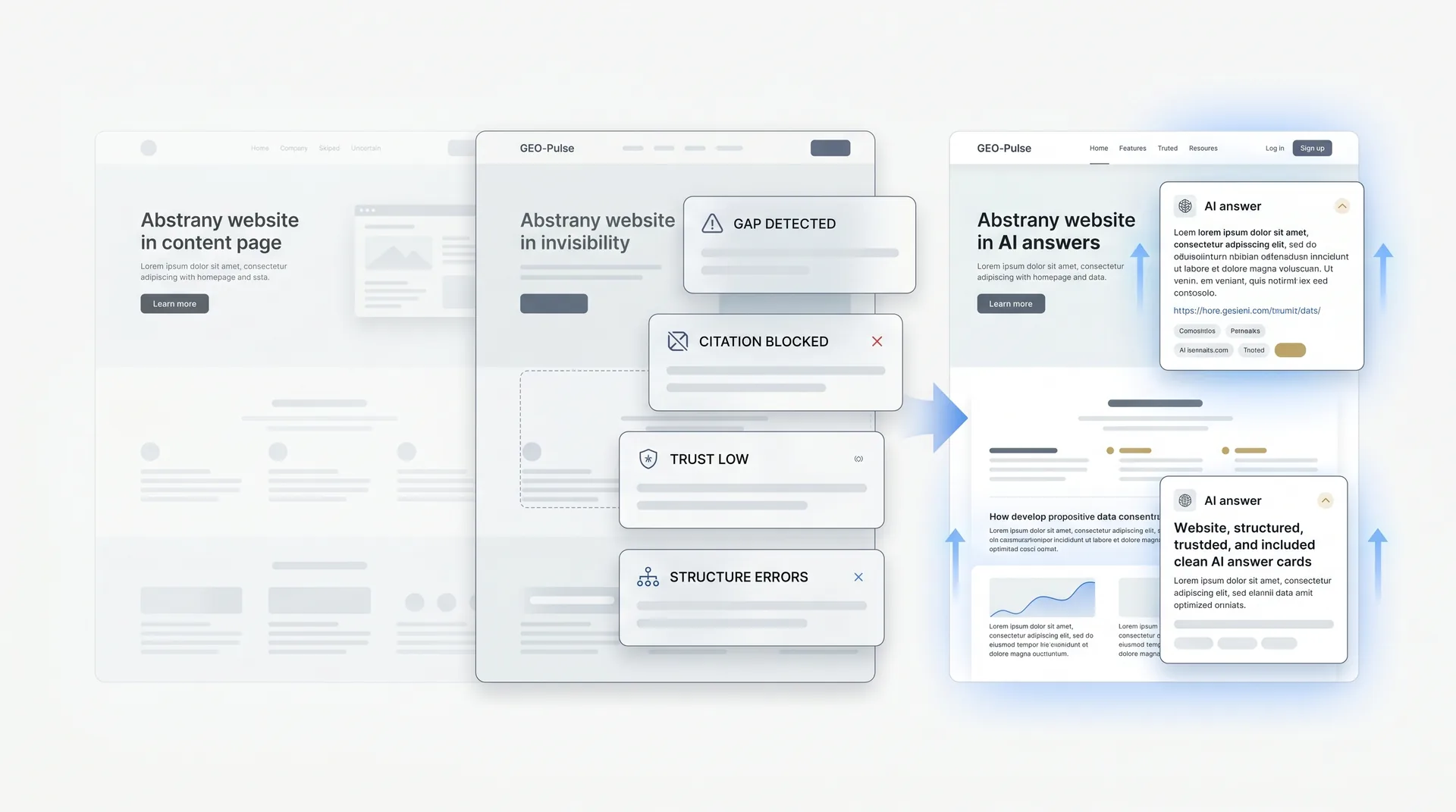
What you get
Every scan should answer three questions clearly: where AI visibility is weak, what to fix first, and how to tell whether progress is becoming real rather than cosmetic.
Visibility
AI inclusion gaps
Diagnosis
Top blockers to fix
Execution
Priority implementation path
Evidence
Tracked improvement over time
yourdomain.com
Run a scan to see where visibility is fragile, which blockers matter first, and how the first fixes should be sequenced. The numbers here are illustrative only.
What a useful report should clarify
- 1. Which pages or signals are limiting inclusion in AI answers.
- 2. Which fixes deserve engineering or content attention first.
- 3. Which improvements should be tracked to prove the work is paying off.
Why teams use it
- infoSee whether AI is ignoring the pages that explain your product, offer, and buyer value.
- infoTurn findings into concrete implementation work instead of leaving the audit in a doc.
- infoTrack whether progress is becoming real, not just prettier in an internal scoring model.
What makes a page easier to quote and summarize
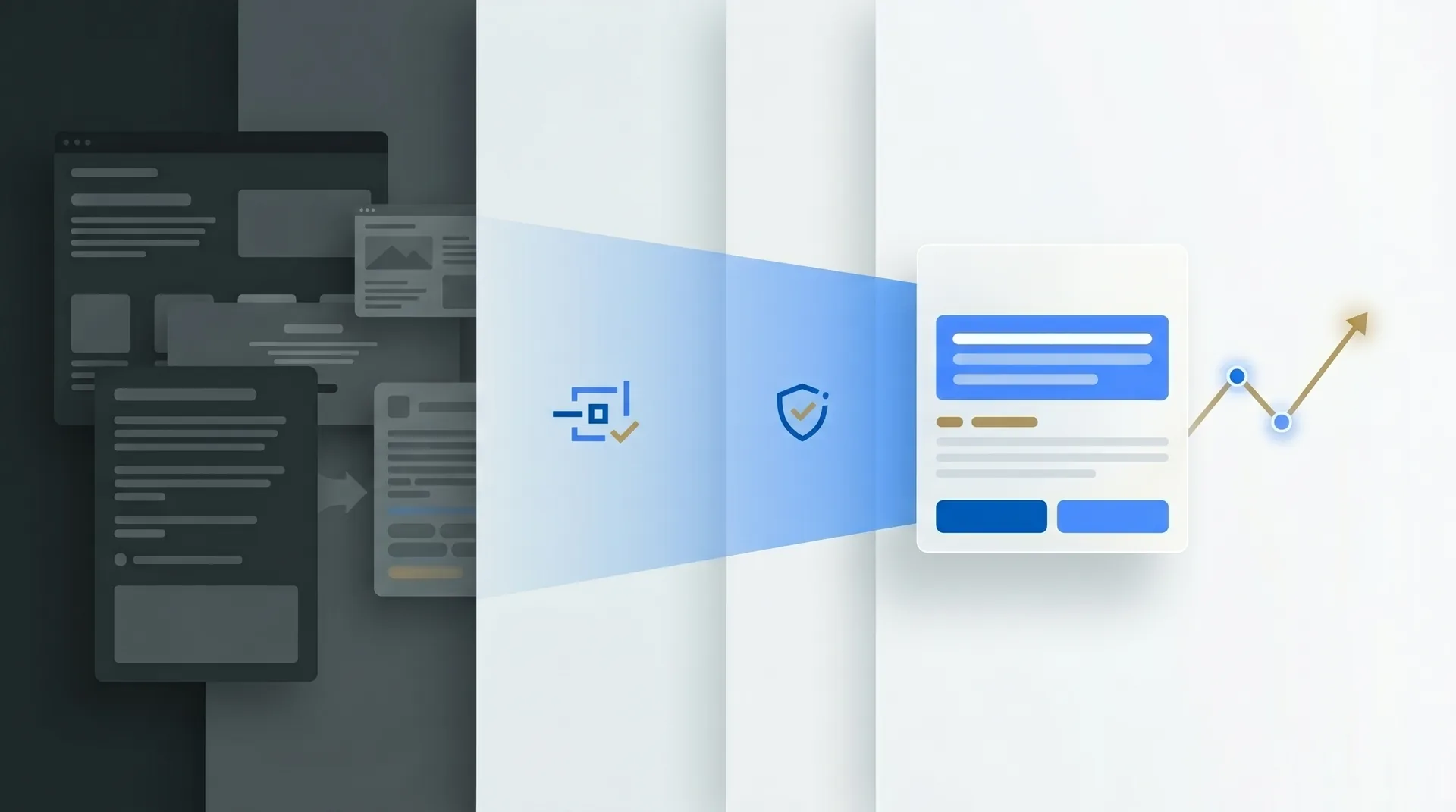
A page does not become reusable because it is long. It becomes reusable because the main claim is explicit and the structure is easy to segment.
Check 1
One clear H1 that names the page topic directly.
Check 2
Short sections that answer one question or decision at a time.
Check 3
Definitions, lists, and steps that still make sense when quoted alone.
Check 4
Visible authorship, canonical URLs, and supporting references where claims matter.
Who GEO-Pulse is for
GEO-Pulse is for teams that need to stop guessing whether AI is surfacing them, and want a practical way to move from visibility uncertainty to shipped improvements.
Founders and in-house teams
Use GEO-Pulse to understand whether AI is ignoring the pages that explain your product, pricing, and buyer value before you invest in more content.
Agencies
Use the same workflow across client sites to separate real visibility blockers from lower-signal cleanup work and move clients toward shipped fixes faster.
Content and SEO operators
Use the report to identify where pages need clearer definitions, better internal linking, and stronger extractability instead of more volume for its own sake.
Common questions, answered directly
Short answers help people and machines understand the tool without reading the whole report or inferring the meaning from layout alone.
What does GEO-Pulse check?
It checks the signals that affect how clearly machines can crawl, interpret, and reuse your public pages. That includes robots rules, crawl access, structured data, heading structure, trust cues, internal linking, and content extractability.
What does AI search readiness mean?
AI search readiness means a public page is easy for crawlers and answer engines to fetch, segment, understand, and quote. The core requirements are crawl access, clear page structure, explicit entities, and copy that can stand on its own when extracted.
Do I need an account to run a scan?
No. You can run a free scan first. You only need an account when you want to save reports, compare runs over time, manage a workspace, or route findings to a team workflow.
Is this a ranking or traffic prediction tool?
No. GEO-Pulse helps you measure visibility readiness and presence signals, but it does not guarantee rankings, traffic, or citations.
What should I fix first after a scan?
Fix blocking directives and crawl access first. Then improve answer structure, metadata, and trust signals on the public pages that explain your product, capture demand, or support high-intent queries.
We align the audit to public standards and search guidance
GEO-Pulse does not use a hidden scoring model. The checks map to documented crawl, metadata, and structured-data guidance so teams can review the underlying standards before they act on the report.
That makes the output easier to trust internally: engineering can verify the technical fixes, content teams can understand the extraction requirements, and operators can tie each recommendation back to a public reference.
Stop treating AI visibility like guesswork
Run the pages that explain your offer most directly and see where visibility is weak, what to fix first, and whether the work is becoming measurable over time.
No credit card for the free audit
Start with the page that explains your offer most directly. That is usually where answer engines and high-intent buyers decide whether the rest of the site is worth trusting.